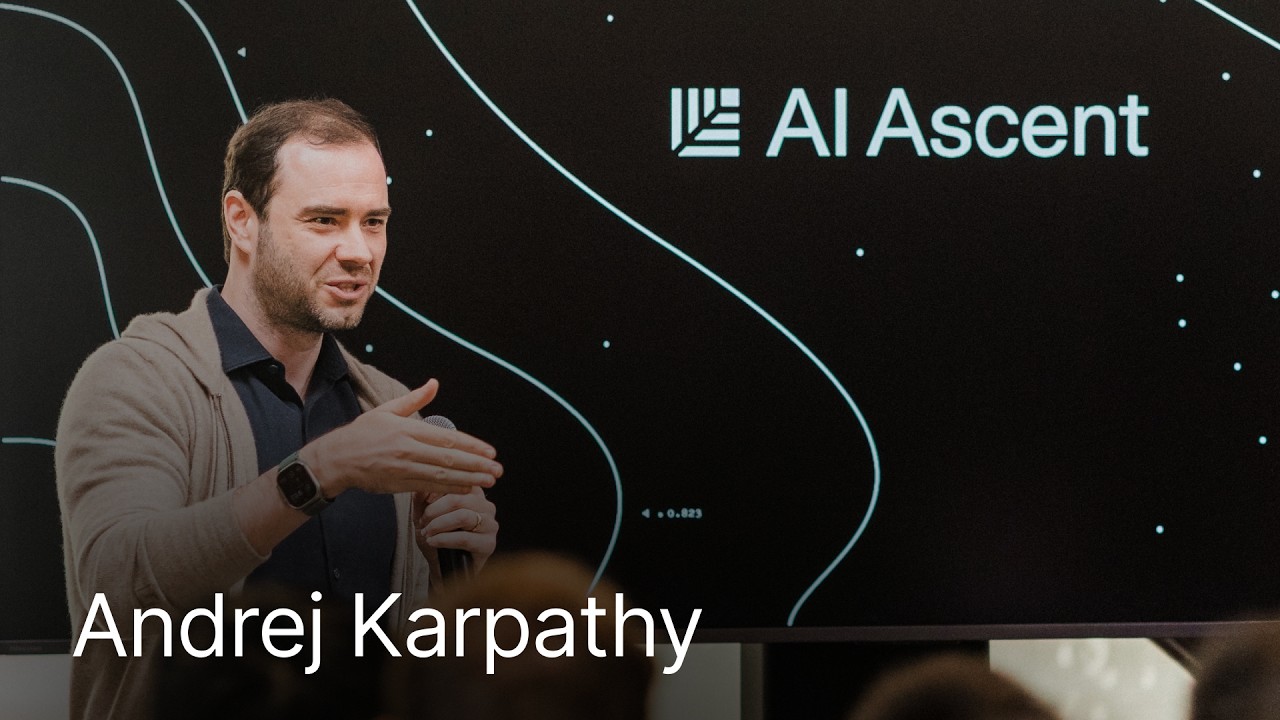
This episode unpacks two seismic shifts in the AI industry that have developers and investors buzzing.
First, the news that Andrej Karpathy—renowned co-founder of OpenAI, longtime head of Tesla’s AI division, and creator of legendary neural-network-from-scratch tutorials—has joined Anthropic. Karpathy is a rare talent who not only pushes the frontiers of deep learning but also makes it accessible. He says he’s eager to dive back into “formative” research on large language models, a turning point where the industry’s direction will be set. Specifically, he emphasizes the “data engine” concept: an automated loop that collects model failures, labels them, and retrains to improve performance efficiently. At Anthropic, a company known for its safety-first approach, Karpathy will focus on boosting model capability and data quality, complementing its ethos with raw engineering power. The timing is impeccable: recent enterprise surveys show Claude overtaking OpenAI’s GPT in corporate adoption (34.4% vs. 32.3%). While many speculate Karpathy’s move was driven by a philosophy favoring decentralized AI over reliance on a single giant (like Microsoft), one thing is clear—Anthropic’s research heft just got a major upgrade. The “data engine” could be a game-changer, systematically turning insights from real-world usage into smarter, safer models.
Second, Microsoft and OpenAI have officially terminated their exclusive cloud partnership. For years, Azure was the sole cloud provider for all OpenAI services, and Microsoft took a cut of the profits. Now that deal is over. OpenAI likely wants a clean path toward an independent IPO or a different corporate structure, liberating itself from Azure lock-in. Meanwhile, Microsoft is quietly canceling enterprise licenses for Anthropic’s Claude Code, signaling strategic distance—even though the Microsoft–OpenAI relationship isn’t fully severed. The immediate impact? Users will see more service options across clouds, and Microsoft’s own AI products may become more model-agnostic. But the deeper story is about cost. Copilot’s new “agent mode” can plan, search, write, and debug entire codebases autonomously—an incredible leap that devours tokens in the background. Monthly flat-rate fees can’t sustain that; reports hint at an upcoming credit-based pricing that charges per action. For developers, this means paying more as AI takes on heavier work, a shift from all-you-can-eat to pay-as-you-go.
Taken together, these changes reflect a formative phase for AI. Top talent is concentrating where it can make the biggest impact, while old partnerships buckle under the weight of independent ambitions. The landscape is becoming more diverse, more competitive, and inevitably more expensive. Developers should watch closely—not just for technical breakthroughs, but for how these power moves will reshape the tools and bills they’ll face in the coming years.