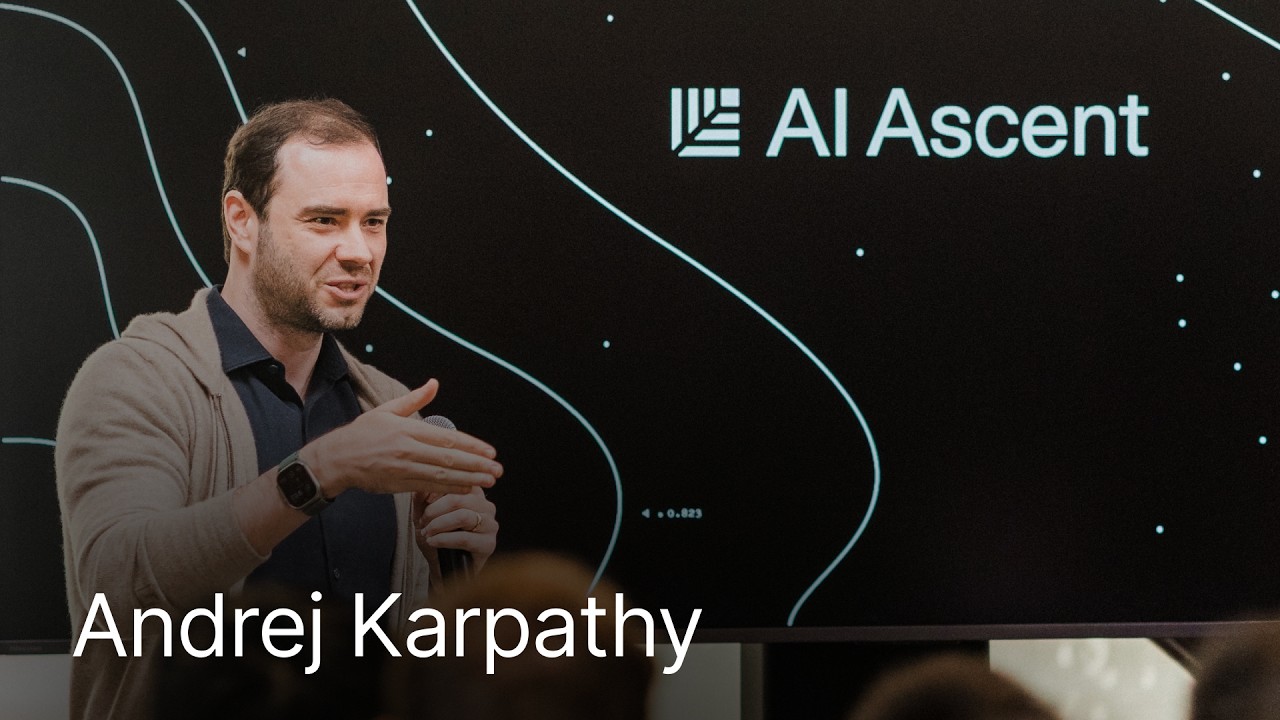
Andrej Karpathy, former AI lead at OpenAI and Tesla, recently posted a video that demystifies AI agents in plain language. He opens with a reality check: stop conflating agents with AGI. An agent, he says, is more like a new intern—capable of doing real work, but needing close supervision, clear instructions, and a tight feedback loop. Throughout the video, he uses this intern metaphor to unpack what agents are, how to use them, and where they’re headed, all without drowning you in jargon.
His central argument is pragmatic. Around 2027, we’ll see AI systems that can reliably handle PhD-level research tasks. That’s not a prophecy about AGI; it’s a practical threshold. When a system can do what takes years of doctoral training, the world won’t be the same. Crucially, Karpathy insists that safety and alignment aren’t afterthoughts—they must be baked into the development process itself. He repeats a core idea: an agent’s intelligence takes the shape of whatever container you build around it—your instructions, the feedback loops you design, and the guardrails you set.
On the nuts and bolts, he covers model choice, commercialization, and bottlenecks. He argues you don’t need the most powerful model from day one; what matters is how well the agent can absorb environmental signals and correct itself in a loop. On the business side, he notes that the trend is API-first—focus on supplying the underlying agentic capability and let the ecosystem build consumer apps on top, rather than chasing polished user interfaces prematurely. Many worry about chip and compute shortages, but Karpathy sees those as physical bottlenecks that won’t bite before 2027. The real pinch points, he says, are data, algorithms, and organizational capacity. Trained right, an agent is like a smart intern: you need good textbooks (data), good mentors (algorithms and processes), and a team that actually knows how to teach.
Yet the intern analogy has its limits. Agents mess up, take shortcuts, misinterpret prompts, and rarely tell you “I don’t know, please teach me.” That’s why human oversight remains non-negotiable. Karpathy doesn’t downplay the risks: if alignment research lags behind capability growth, agents could become amplifiers of human bias. That’s why he’s not in a race to build the strongest agent first; he’s advocating for the safest trajectory. His vision isn’t about agents replacing humans, but about humans learning to be managers—translating intent into well-structured tasks and feedback mechanisms that the agent can follow.
He wraps up with a clear-eyed bet: in the next five years, AI agents won’t turn the world into a sci-fi movie, but they will automate large swaths of repetitive cognitive work. Human value will then center on defining problems, designing feedback loops, and being the boss to an increasingly capable digital intern. After reading this primer, you’ll watch the full video with Karpathy’s throughline in mind: agents aren’t gods, they’re tools—and the remote control stays in our hands.


![[1hr Talk] Intro to Large Language Models](https://i.ytimg.com/vi/zjkBMFhNj_g/maxresdefault.jpg)