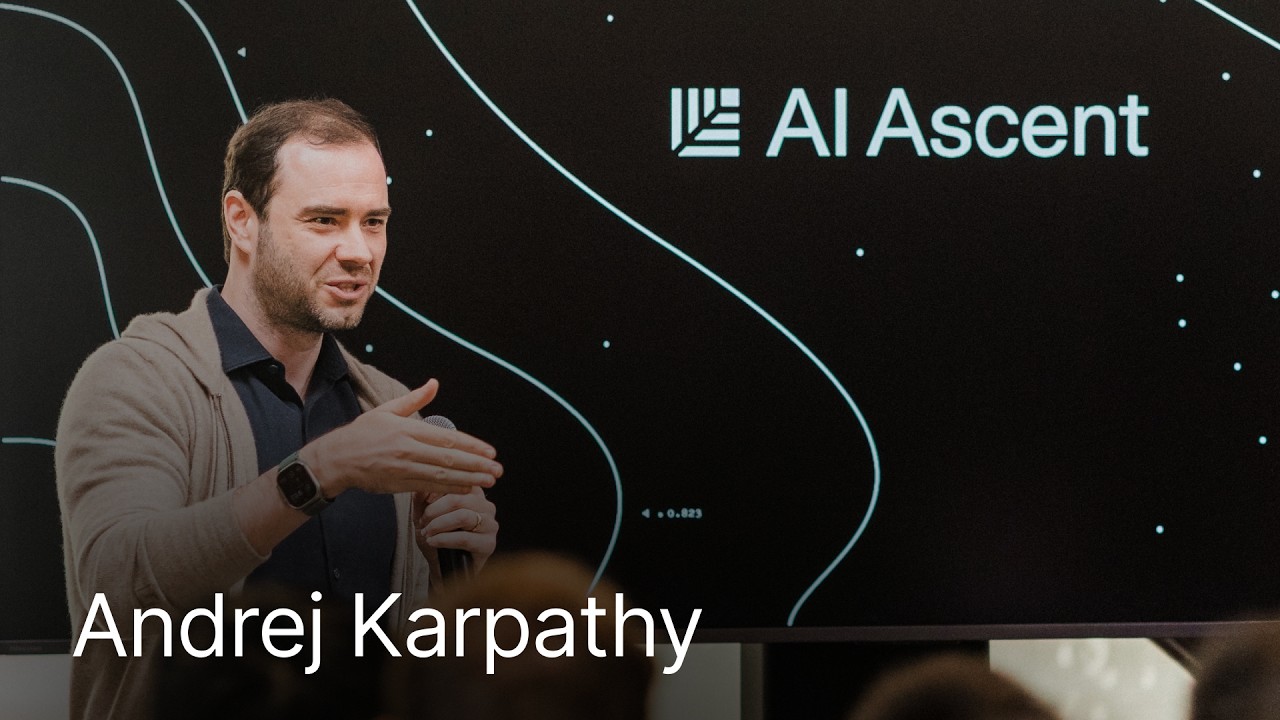
In a recent interview, prominent AI figure and former Tesla AI director Andrej Karpathy pushed back against the industry hype that 'this is the year of agents.' He argued that we are not building animals but summoning ghosts—AI models that mimic humans but lack true intelligence and autonomy. He prefers to call the coming period 'the decade of agents,' not just one year.
Karpathy's core message is pragmatic: stop chasing concepts and start writing code and building systems. He points out that today's LLM-powered agents have significant capability deficits: insufficient general intelligence, inability to handle multimodal information like images and sound, clumsy operation in real computer environments, and critically, no continual learning—they forget user preferences from one session to the next. Such systems are far from becoming reliable 'digital employees' that can be entrusted with tasks. He places the current AI wave in historical context, arguing that the so-called 'intelligence explosion' has been ongoing for centuries, with everything gradually automating. AI agents are just the latest step, not a sudden leap.
To support his view, Karpathy cites examples of overhyped predictions on social media and at industry events, often serving fundraising narratives rather than technical reality. He emphasizes that the only way to gain real understanding is to build—write code, run models, tune systems—not to produce blog posts or slide decks. He also notes the long engineering distance from research demo to trustworthy production system, requiring solving countless edge cases and building infrastructure for memory, planning, and tool use, which cannot be done in a year or two.
Of course, there are dissenting voices. Some believe that scaling models and fine-tuning could lead to breakthroughs in agent capabilities within 1-2 years, without needing a decade. But Karpathy's conservative estimate stems from his deep engineering experience: the gap between demo and product involves huge challenges in reliability, robustness, and user experience. He is not pessimistic but 'cautiously optimistic'—the technical path is feasible, but we must abandon fantasies of quick victory and invest in long-term engineering efforts, focusing on foundational capabilities like multimodality, memory, planning, and tool use, not just text generation.
In summary, Karpathy's stance is that the future of AI agents is promising but not imminent. Over the next decade, what matters is not who shouts loudest but who actually builds working systems. For practitioners, the best strategy is to talk less and code more, tackling the dull but critical engineering problems step by step.