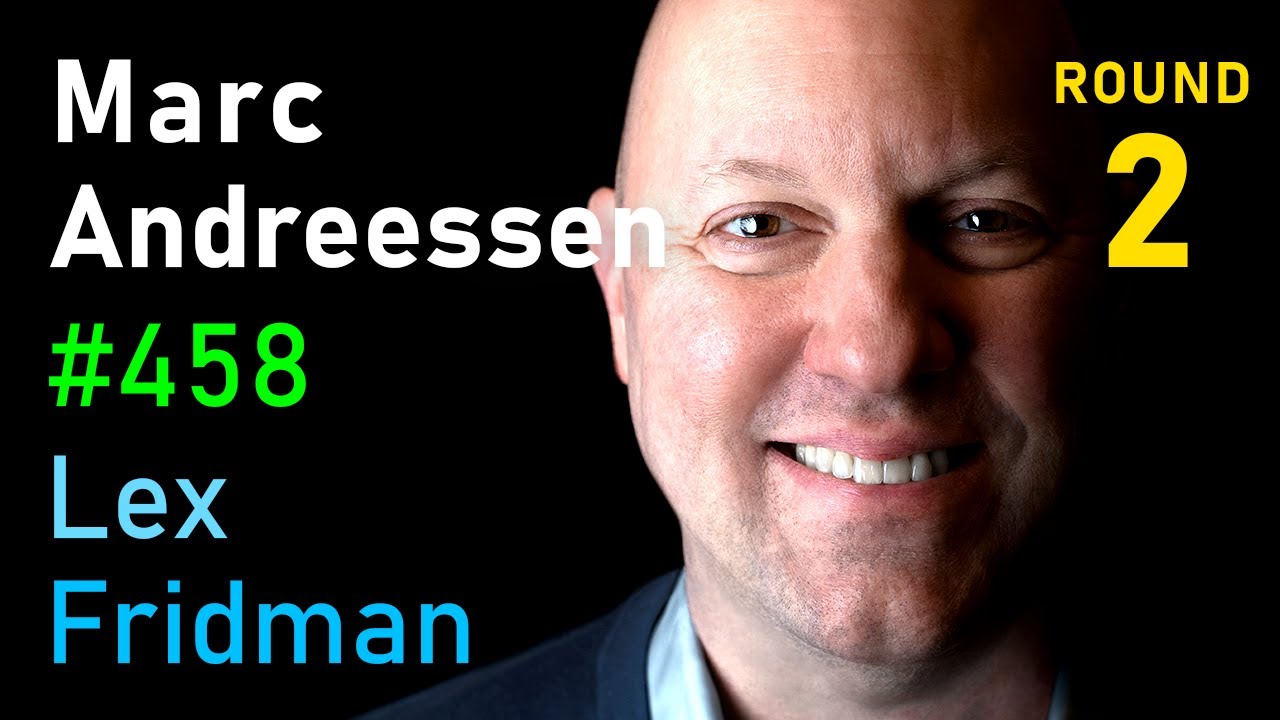
Marc Andreessen, co-founder of Netscape and partner at top venture firm a16z, is Silicon Valley's most prominent techno-optimist. In this interview, he lays out his 'Techno-Optimist Manifesto', a straightforward call: technology can solve all human problems, and we should embrace it fully rather than fear or restrict it.
Andreessen argues that society suffers from a 'dystopian bias' against technology—people worry AI will replace jobs, spiral out of control, or even destroy humanity. But he points out that every major technology in history (from agriculture to the Industrial Revolution, from the internet to smartphones) has dramatically improved human welfare. Technology is not a zero-sum game but a positive-sum one: it creates new opportunities, industries, and capabilities, rather than merely eliminating old jobs. He emphasizes that AI is the 'ultimate general-purpose technology', capable of accelerating scientific discovery, medical breakthroughs, energy innovation, and everything else, thus tackling the toughest problems like climate change, disease, and poverty.
To support his claim, Andreessen cites historical examples. In the 19th century, 90% of Americans worked in agriculture; today it's 2%, yet agricultural output has multiplied, and people eat better and cheaper. Similarly, when the internet emerged, people feared it would destroy jobs, but it created hundreds of millions of new ones. He believes AI will repeat this pattern: it will automate many repetitive tasks but also unleash human creativity, allowing people to do more valuable work. He also refutes the 'AI will cause mass unemployment' argument, noting that such predictions ignore the labor market's self-adjusting capacity after every technological revolution.
Of course, Andreessen's optimism is not without controversy. Critics argue his view is overly idealistic, ignoring negative effects like inequality, privacy violations, and power concentration. AI could widen the rich-poor gap, letting a few tech giants capture most gains, or be used for surveillance and opinion manipulation. Andreessen's response: the problem is not technology itself but how society governs it. He advocates guiding technology toward good through markets, competition, and democratic institutions, rather than hindering progress through fear and bans. He acknowledges risks but argues that the risk of 'not developing technology' is greater—for example, if we stop AI research out of fear, we might miss key tools to solve climate change or disease.
Ultimately, Andreessen's manifesto is a love letter to the future. He calls on engineers, entrepreneurs, and policymakers to shed fear and embrace 'techno-optimism' as a guiding principle. In his view, humanity's way out is not retreating to a pastoral past but accelerating forward, using technology to conquer one challenge after another. This episode is for anyone anxious or curious about AI's future—it won't give you answers, but it will give you a perspective worth taking seriously.