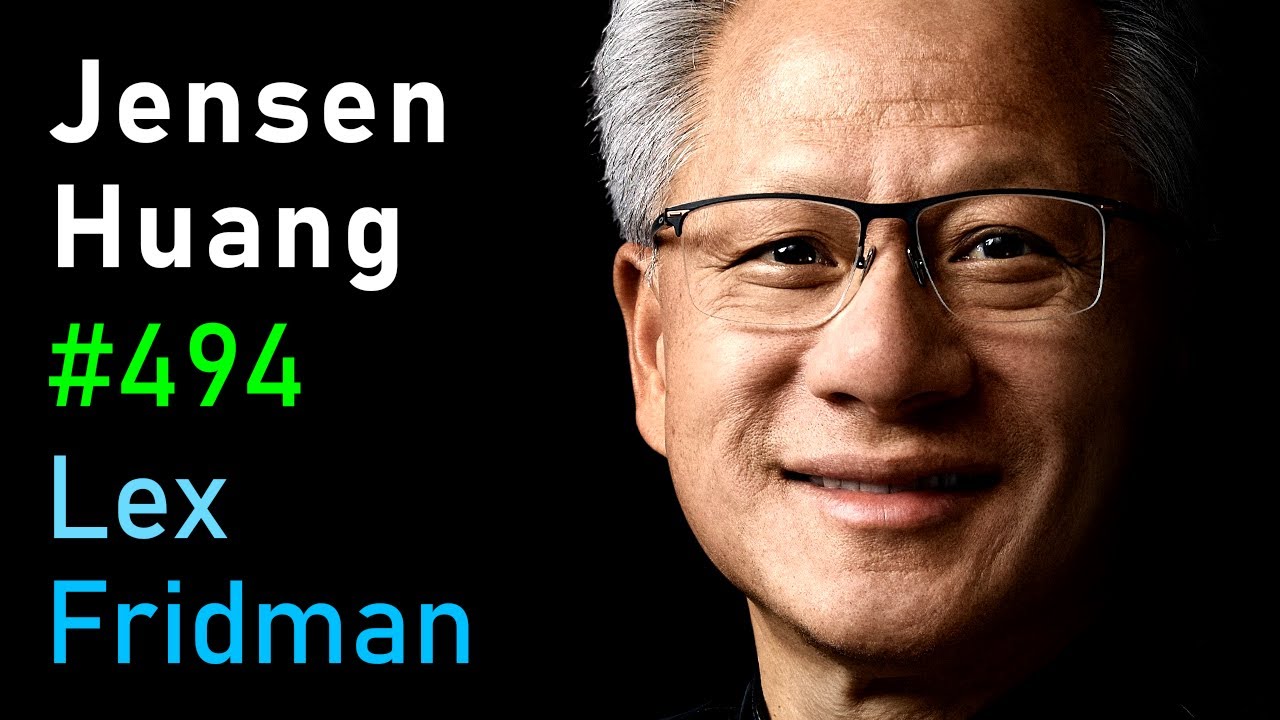
Nvidia CEO Jensen Huang recently laid out a prediction that shook the tech world: the AI chip market will grow to a trillion dollars over the next decade, and the demand surge is only beginning. This is not a hollow forecast but a sober calculation rooted in the arms race for large language models and the explosion of computing needs. Huang made the case in a public conversation that felt less like a product launch and more like a deep industry reflection, pointing directly to the next ten years of chips. Nvidia, which started with gaming GPUs, now sits at the heart of general-purpose computing, AI training, and inference, and Huang sees a future far more radical than most expect—an exponential climb fueled by AI-native applications, massive model parameters, and real-time inference.
Behind Huang's claim lies a fundamental industry pivot. AI is no longer confined to lab papers and demos; it's becoming a utility, and chips are the power plants. Over the past few years, model parameters have doubled every few months, and the floating-point operations needed for training have exploded. Single-chip performance gains can't keep up, so thousands of chips must be clustered together. Nvidia's GPUs, from H100 to upcoming architectures, sit right at that bottleneck, each chip a coveted 'energy source' for AI companies. Huang thus sees cloud providers, sovereign AI initiatives, and enterprise private deployments all pouring massive capital into compute over the next decade, pushing the total addressable market into the trillion-dollar range. The number isn't pulled from thin air—it's an estimate based on current datacenter capital expenditure, AI penetration rates, and new workloads.
Yet if one focuses only on chip shortages, the obvious conclusion is that production capacity will choke AI's throat. Huang offers a contrarian view: at least until 2027, chips and compute won't be the hard constraint. The real bottlenecks lie in data, algorithms, and organizational capacity. Most enterprises sit on mountains of raw data that can't be easily cleaned or labeled, advanced Transformer architectures still search for more efficient attention mechanisms, and teams that truly understand both algorithms and engineering are scarce globally. In other words, chip production is chasing demand, but other parts of the pipeline are more dangerously disconnected. That's why Huang keeps pushing 'full-stack optimization': Nvidia doesn't just sell cards; it sells the CUDA ecosystem, frameworks like Megatron, and software layers that stitch it all together, lowering the barrier to unleash compute. Only then can chip capability avoid being wasted and the trillion-dollar market avoid being a mirage.
This vision is not without its critics. First, the trillion-dollar assumption hinges heavily on how fast AI applications actually land; if killer apps fail to materialize, the current chip-hoarding frenzy could deflate. Second, the industry is rapidly converging on a near-term expectation: within five years we may see domain-specific AI that can accomplish PhD-level research tasks. Such systems aren't AGI but supercomputing tools that outstrip human experts in narrow fields. With that comes the unavoidable issue of safety—alignment research can't be an afterthought once AGI arrives; it must be baked into every model iteration. Some argue this is a far longer challenge than chip production, and Nvidia risks leaving a gap in AI safety standards and ecosystem enablement if it only focuses on hardware. Finally, how the commercial model shakes out will shape demand: whether the world moves toward API-based provisioning of underlying agent capabilities or dives into consumer applications will determine where the bulk of compute purchasing goes.
In the end, Huang's trillion-dollar call is bold, but it is best seen as a map for the coming decade, signaling that compute power stands at the center as a new factor of production. Chips are not the endgame—they are the fulcrum to pivot entire industries. Nvidia's path is clear: it won't dig for gold in the application layer; it will sell the shovels, embedding ever-stronger software capability into them. Whether the trillion-dollar dream materializes depends on algorithmic evolution to keep absorbing compute, on AI safety to win public trust, and on a capability leap that may well crash into reality within five years. The average reader doesn't need to memorize the numbers—just understand that the AI chip war has just begun, and its ripples will touch every sector.