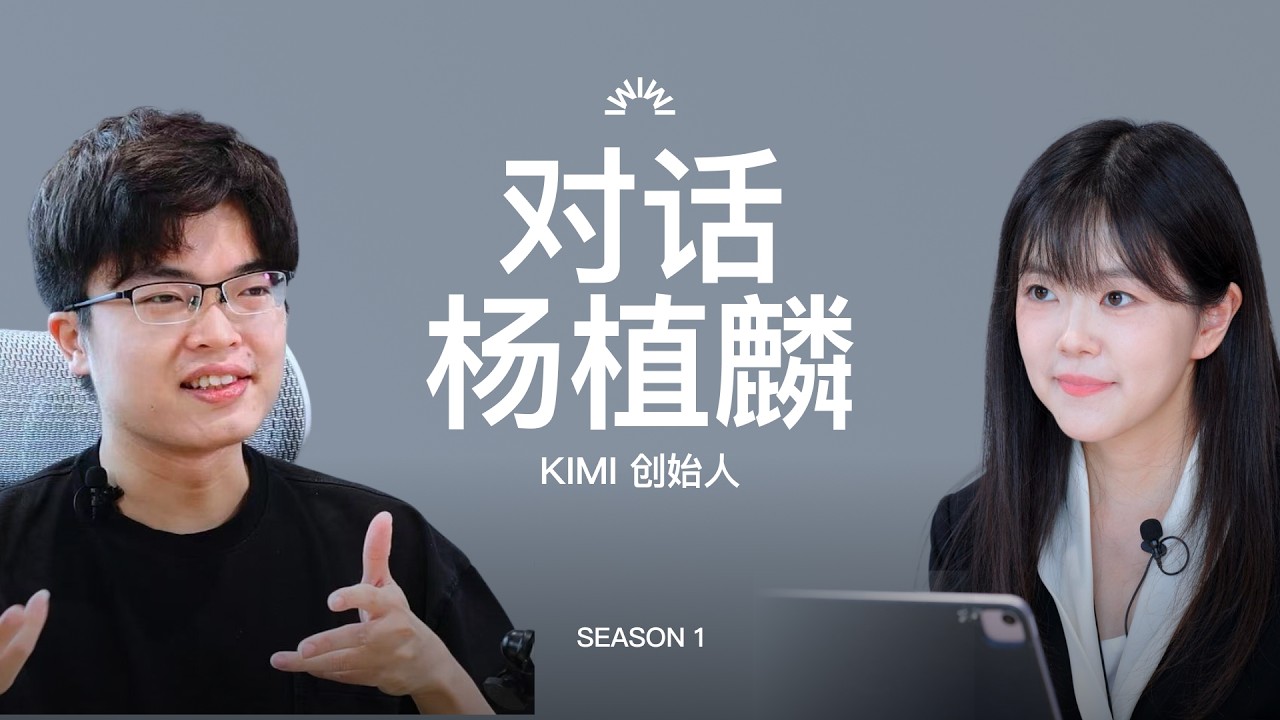
At a recent AI research event, a speaker from an open-source AI lab presented their latest work on building 'better open models.' Open models grant full access to weights, enabling deployment on local servers or the cloud without black-box constraints. However, the speaker stressed that openness alone isn’t enough; the models must also be genuinely powerful to advance the democratization of intelligence. Citing a slide from NVIDIA CEO Jensen Huang’s CES talk, he noted that open models are rapidly closing the gap with proprietary ones, but smarter scaling strategies are crucial for them to not just catch up but lead.
For years, AI progress has been driven by a standard scaling law: more training tokens and compute lead to lower prediction loss. But this brute-force approach is hitting diminishing returns. The speaker introduced three novel scaling dimensions. The first is 'token efficiency.' Instead of merely adding training data, they aim to shift the entire loss curve leftward—achieving much lower loss with the same token count—by designing better model architectures and optimizers. Think of it as teaching a student to learn more from each lesson, rather than piling on extra homework. This results in models that extract richer intelligence from each datum.
The second dimension is context length. Typical models process only limited text at once, but complex tasks demand long-range memory and reasoning. By significantly extending context windows, they observed higher accuracy in token prediction at any given position. In practical terms, models gain the ability to handle lengthy documents, multi-day workflows, or even reasoning chains that unfold over weeks. The speaker frames this as enabling a single agent to 'run longer'—persisting through extended, uninterrupted thought.
The third dimension is 'agent swarms.' Instead of relying on one monolithic AI, they orchestrate multiple agents that divide and conquer subtasks in parallel. This swarm paradigm multiplies the complexity a system can handle, much like a team of experts tackling different facets of a problem simultaneously. The speaker wove these dimensions into a unified 'agent language': token efficiency gives agents stronger priors for efficient reinforcement learning search; long context lets them operate over long horizons; and agent swarms expand the system's parallel capacity. Combined, they point toward AI that is both perseverant and collaborative.
Of course, open models still face gaps in certain benchmarks compared to the best closed-source systems, and openness introduces misuse risks. Yet the speaker’s vision is clear: by advancing these scaling dimensions, open models will bring frontier intelligence to every corner of the globe—from rural clinics to startup garages. This talk was both a technical blueprint and a call for equitable access: when models are open and excellent, the promise of AI becomes a shared resource, not a walled garden.