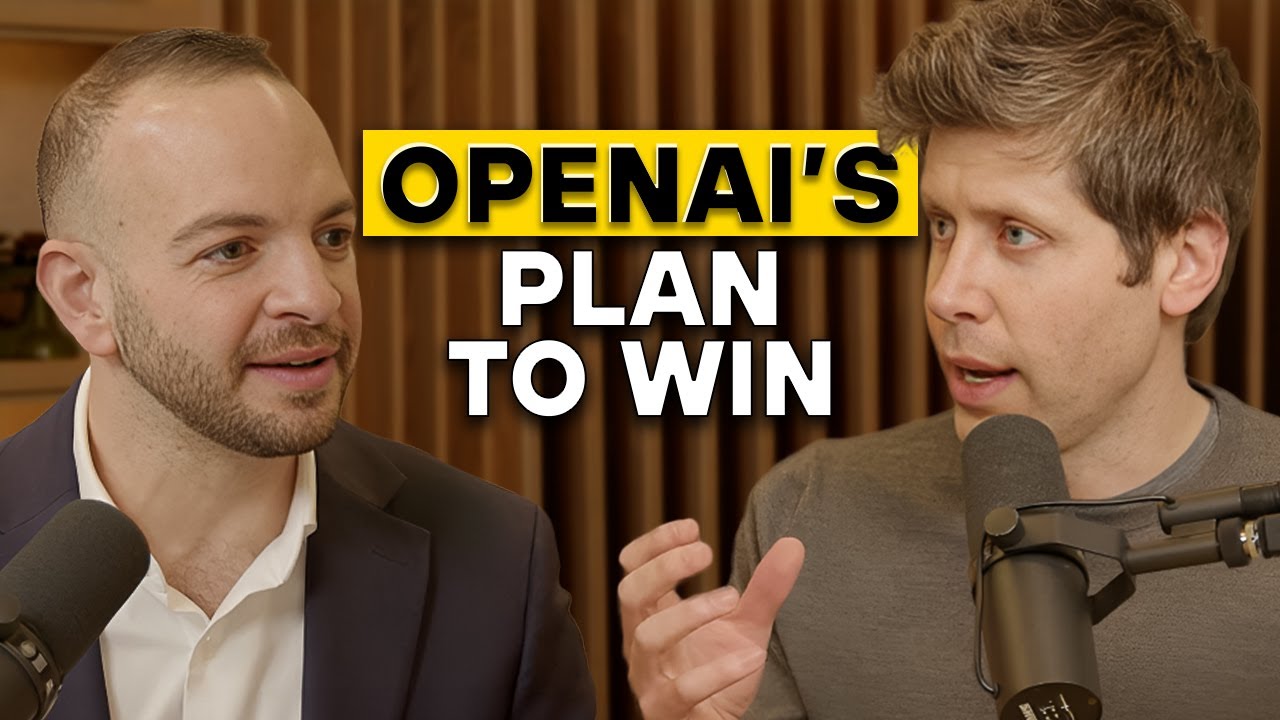
Sam Altman at TED2025 laid out a concrete timeline for commercializing AI agents and superintelligence. He's not one for vague promises: within a few years, we'll see AI systems capable of independently performing PhD-level research. This isn't a debate about defining AGI—it's a pragmatic judgment: when AI can reliably complete tasks that require years of doctoral training, the world has already changed.
Altman's core argument is that commercializing AI agents must start with supplying underlying capabilities, not rushing to consumer apps. OpenAI's path is API-first, leaving the application layer to the ecosystem while focusing on the smartest agentic capabilities. This restraint reflects a conviction that alignment and scaling must move in lockstep. Safety research isn't something you do after AI becomes powerful—it's the process itself. From RLHF to Constitutional AI, the entire organizational design is a product of that view.
On the timeline, Altman sees chips and compute as physical bottlenecks but not binding before 2027. The real bottlenecks are data, algorithms, and organizational capacity. He frames export controls not as halting technology but as buying time for alignment research. Over the next five years, AI will evolve from a tool to a true agent, autonomously handling complex tasks like coding, research, and process management. This is not just a technical breakthrough but a fundamental shift in business models.
Of course, the path has its critics. Some argue Altman's commitment to parallel alignment and scaling is just PR—in practice, scaling always wins. Others worry agent commercialization will accelerate job displacement and power concentration. Altman's response: OpenAI isn't racing to be first in AGI but first in safety. Whether that holds remains to be seen.
Overall, Altman paints a pragmatic yet radical future: AI agents will transform research, coding, and business operations within five years. OpenAI's API-first model embeds safety into development rather than retrofitting it. The key takeaway: the agent era isn't a distant fantasy—it's unfolding now, and the key to commercialization isn't who runs fastest, but who runs steadily.